
Sexual reproduction
PhD project Cedric Schindfessel
Natural variation in temperature sensitivity of male meiosis and pollen development
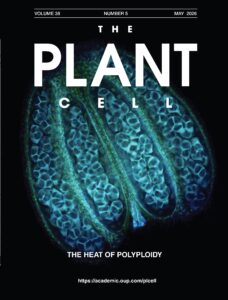
Sexual reproduction creates genetic variation in offspring that through natural selection results in species adapted to changing environments. Meiosis, the process that underlies genetic variation, is itself influenced by several environmental factors and appears to be highly sensitive to temperature stress. High and low temperatures or sudden temperature changes during meiosis can disrupt the normal process, often resulting in decreased fertility. In plants, heat stress causes changes in gene expression and chromosome structure, defects in cytoskeletal organization and cytokinesis. Given the importance of good fertility for grain production and the survival of natural populations, it is vital for future food production and biodiversity that we understand how climate change affects meiosis in plants. This project studies the natural variation in temperature stress sensitivity, in order to identify the genetic factors and alleles responsible for defects in male meiosis and reduced fertility in both Arabidopsis and rice due to temperature stress.
PhD project Anran Zhang
Regulation of heat tolerance genes
The PhD project of Anran is to investigate HEAT INTOLERANT4 (HIT4). The Col-0 hit4-1 mutant does not survive 48h 37C heat stress and hit4-1 microspores collapse upon heat treatment. HIT4 is likely a chromatin remodeling factor that we speculate to release suppression of gene expression required to survive heat stress. By studying the function of HIT4, we aim to uncover critical genetic factors that are necessary to support short heat waves.

PhD project Desheng Kong
Heat stress induced cell reprogramming
The PhD project of Desheng is to investigate the involvement of HEAT SHOCK FACTORS during cell reprogramming and regeneration. Microspores can be reprogrammed to initiate embryogenesis after a period of heat stress. How does heat stress reprogram microspores and is this a general phenomenon that also occurs in sporophytic cells? Transcriptome datasets are exploited to identify which heat shock factors and chaperones are important for heat stress reprogramming and regeneration.